The Exhibit WASHOKU at JAPAN HOUSE Will Transform Your Next Meal
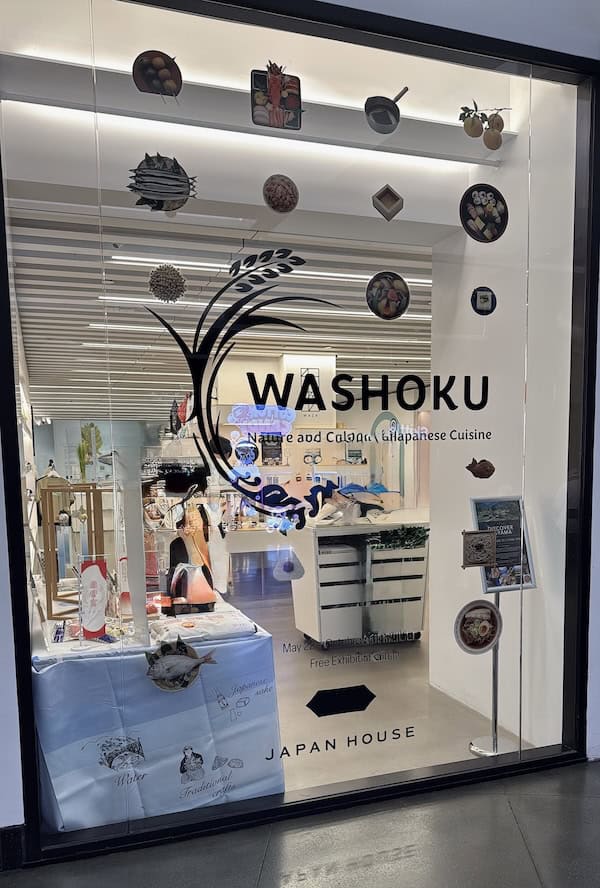
What do you think of when you think of Japanese cuisine? Is it fresh sushi, miso soup, or a savory Japanese hamburg? Well, turns out only two of those can be considered part of Washoku culture, but that’s just the beginning of the story. As with many traditions from the island of Japan, there is a sacredness that permeates the culture, which is why Washoku has been recognized as a UNESCO intangible cultural heritage. The free exhibition, Washoku at JAPAN HOUSE Los Angeles, offers a deep dive into the connection between food and nature in Japanese culture. Not only will it change the way you look at your next meal, but it will inspire you to be more thoughtful with every bite. Below is a look at the history of Washoku through the centuries and how understanding the past can help us preserve the future on a global scale.
*The post is sponsored by Karsha Chang Public Relations, but the opinions belong to EatDrinkLA, which endorses a visit.
What is Washoku?
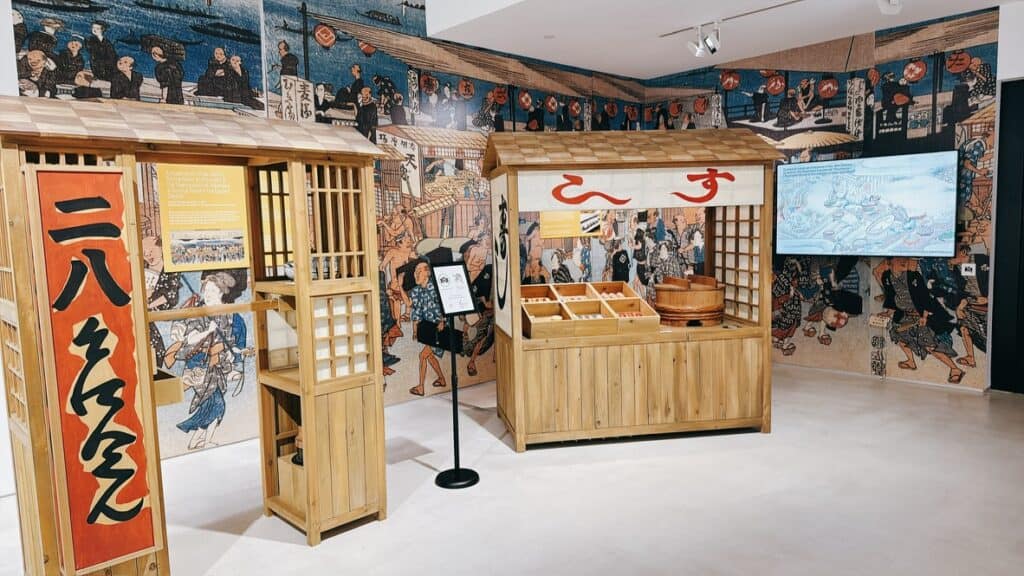
According to UNESCO.org, Washoku is a social practice based on a set of skills, knowledge, practice, and traditions related to the production, processing, preparation, and consumption of food. It is associated with an essential spirit of respect for nature that is closely related to the sustainable use of natural resources. JAPAN HOUSE presents Washoku in a way that lets your own story come through, with open-ended questions throughout the gallery and a historical framework that shows how Washoku has transformed through the different periods of time.
The Importance of the Archipelago
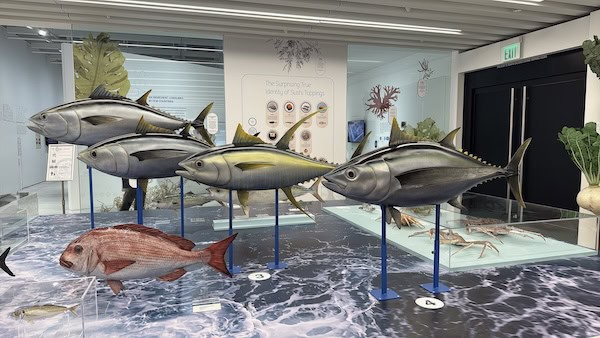
If at its core Washoku is about staying true to the land and following the seasons, then the most essential parts of the practice of Washoku begin with the archipelago of Japan. The beginning of Washoku dates back to prehistoric times, following the ice age, when the archipelago was formed. Its waters are home to 4800 varieties of fish, while on land you’ll find 3000 species of mushrooms, and 1000 edible wild plants. This variety is key to Washoku. Japan is home to the largest variety of daikon radishes, and rice and soybeans are among the most important crops for the country. Then there are the flavors and fermentations that are so specific to the region: Koji, Dashi, Miso, and the secret of Umami.
JAPAN HOUSE helps you understand the scale of the wildlife and varietals available with models done using the food replica technique known as shokuhin sampuru. There are also interactive games to explore migration patterns and even a quiz older children can answer while they explore the galleries. It’s good for adults too :).
Do you Eat like a Prince or a Peasant?
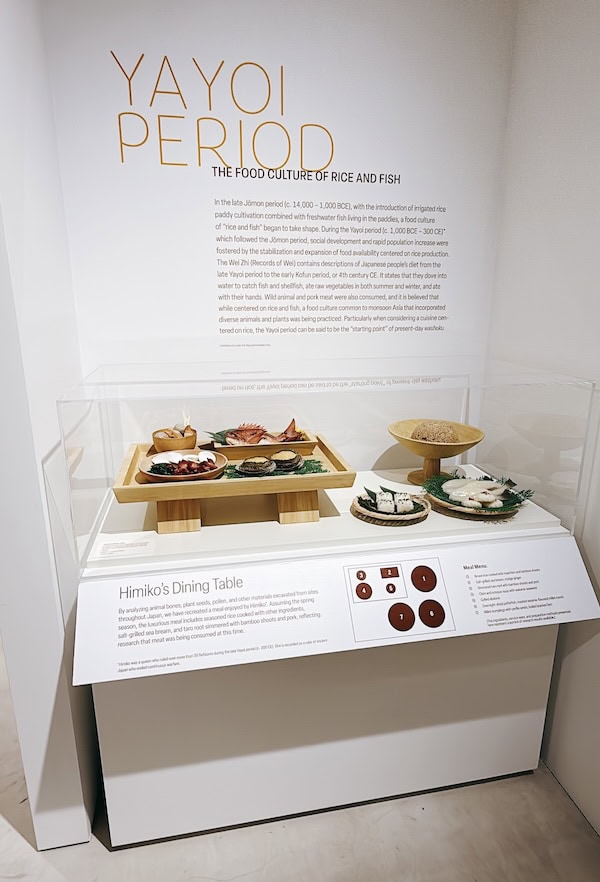
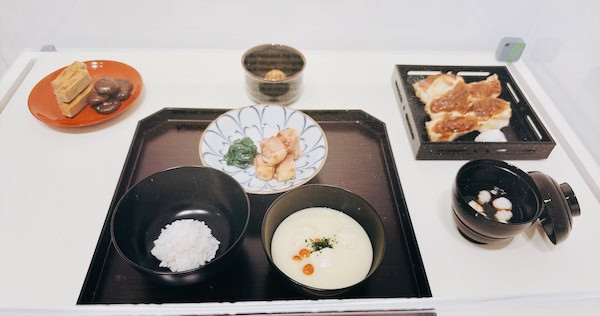
Well-documented historical records make it possible to recreate the meals of long ago, be it a Nara Peasants’ Meal with partially milled rice, leafy greens soup, and salt, or a luxurious feast fit for a queen, Queen Himiko that is, from the 4th century CE. While diets were centered on rice, fish, and vegetables year-round, during the Yayoi Period we also see that wild animals and pork were enjoyed at certain times of the year. Throughout most of Japanese history, there was a “taboo” element to eating meat on four legs, and this ban wasn’t officially lifted until 1868 during the Meiji Restoration. While the basics for modern Washoku have always centered on rice and fish, JAPAN HOUSE offers an in-depth look at the influence of Buddhist monks, as well as wars and globalization, that have transformed it through the centuries.
The Ultimate Bento Box
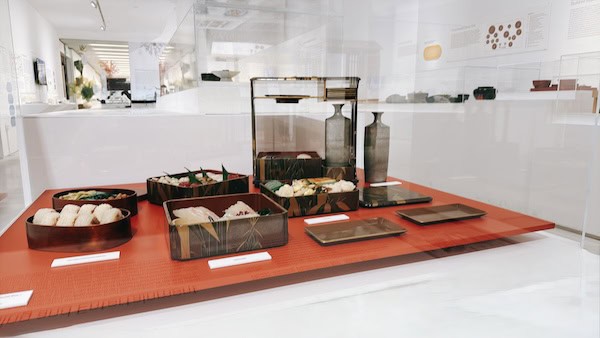
What is now a work and schooltime carrying case was once an elegant way to enjoy meals outside during intermission at theaters and flower viewing. This one is a replica from 1801 with four tiers gently housing steamed flounder, halibut sashimi, camellia mochi, and many other delicacies. This ultimate Bento Box is shown alongside examples of Kaiseki Cuisine and detailed histories of how modern restaurants evolved in Japanese culture.
The Samurai Influence on Food
Everything from Kaiseki to the naming of Progressive Fish as they grow in size can be attributed to samurai customs. The rituals and honor code perfectly blend with Washoku culture, and its impact lives on centuries after the warriors put down their swords.
What is the future of Washoku?
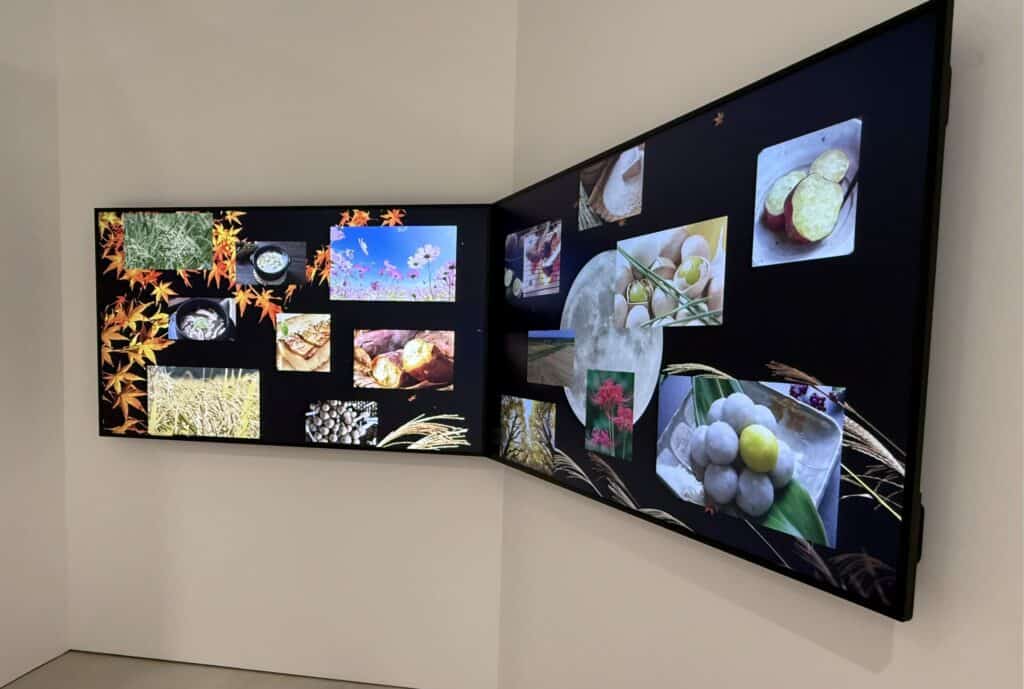
Washoku is something that can be encouraged by every culture, like only enjoying fruits that are in season, or trying to use every part of a whole chicken. Decades of lavish overuse of our planet will no doubt have us circling back to the simpler times of our ancestors out of necessity – only none of us know when that day will come. Until then, practicing a reverence for the food we eat and where it’s sourced will help carve the pathways. Even Japan, which has come to define the term, is facing one of the lowest food self-sufficiency rates in decades. In exploring its beginnings and understanding the evolution, JAPAN HOUSE is working to inspire solutions – maybe from viewers like yourself.
Plan your visit to Washoku at JAPAN HOUSE Los Angeles
Washoku at JAPAN HOUSE will be on display through October 18th, 2026. The FREE exhibition is open Monday to Friday from 11 a.m. to 7 p.m., and until 8 p.m. on Saturdays and Sundays, on the second floor of Ovation Hollywood. This is a great way to pair a cultural experience with a meal or a movie at TCL Chinese 6 Theatres. More information can be found on their website.
Additionally, be sure to subscribe to the newsletter at the bottom of their website so you can stay in the know about Workshops surrounding this and other exhibitions. Sunday, August 11th, has a program titled: Washoku & Wellness: The Science of the Japanese Diet, which includes both a lecture and bento lunch to inspire you to live the Washoku way.